I’m teaching a class at church right now called “Fairy Tales or Miracles?” It is part of our Faith Matters series, an apologetics type of teaching. Did you know that a lot of people don’t believe in miracles? How can that be? Any walk into a hospital nursery after a baby has been born, or a drive by an airport and observe a 40-ton airliner lift off the runway in a matter of seconds does indeed make me believe in miracles. I believe in miracles … and I want everyone to believe too; however, not everyone does believe in miracles. Even in an attempt to discredit the Bible, some people choose to discount the miracles in the Bible as fairy tales, tossing the entirety of the Bible into the category of “make believe.”
It is equally fascinating, though, that we will use the word, “miracle” quite flippantly. There was the “Miracle” on 34th Street where a man named Kris Kringle insisted that he was the real Santa Claus … anyway, the whole thing went to court to determine his mental clarity and in the end, Kris Kringle was exonerated and legitimized as the real Santa … or something like that.

Then there was the “Miracle” on Ice, the famous shellacking by the American Olympic Hockey team of the Soviet team in the 1980 Winter Games in Lake Placid, New York. It was the year I graduated from high school during the heat of the Cold War. Think pre-Ronald Reagan and the Berlin Wall coming down. While a hockey game didn’t end the Cold War, it surely gave us Americans a sense of renewed hope. The USA team went on to beat Finland in the Gold Medal round. Was that a real miracle? I don’t know. Maybe it was just plain luck.
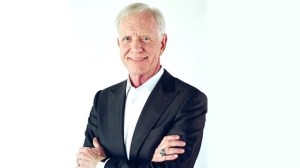
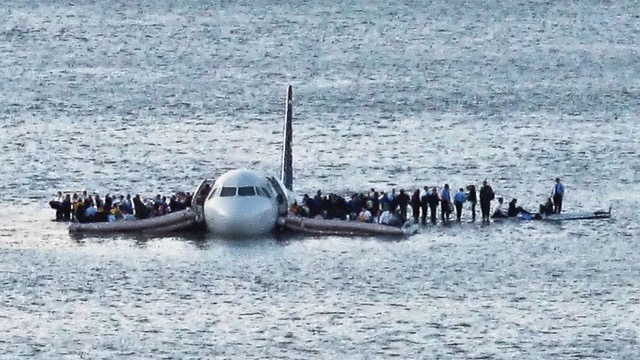
Not too long ago, another miracle took place as Captain “Sully” Sullenberger gracefully, but more importantly safely, guided an ill-fated Airbus A320 into the Hudson River after take-off, having plowed into a flock of birds, incapacitating both engines. It was referred to as the “Miracle” on the Hudson. Now, if there was a miracle out of these three examples, I think that one surely was a miracle. To this day, if I’m ever uneasy on a flight, I just remember that story of Capt. Sully—remarkable talent, skilled in his craft—and I just hope that the captain flying my ship went to the same flight school that Sully did and had the same flight instructor. (Sometimes, I even imagine Sully flying my plane … it gives me temporary peace.)
C.S. Lewis says that a miracle is “an interference with Nature by supernatural power.” Thomas Aquinas defines a miracle as “an event that is beyond nature’s power to produce, that only a supernatural power can do. I like to think of a miracle as an intervention of God in the ordinary. Norman Geisler says, “If natural law is the usual, orderly, and general way the world operates, then a miracle is an unusual, irregular, specific way in which God acts within the world.”
I don’t think we can say that there really was a supernatural invention on Manhattan’s 34th Street … even if it was at Christmastime, nor do I really think God intervened to sharpen the skills of hockey players during the Olympics. I do think God intervened that day to save 155 people as they surfed onto the top of the Hudson River in a passenger jet. The natural law would have put that plane careening into water, potentially breaking up the aircraft … but I believe God stepped in and intervened into the natural order, into the mechanical, and the laws of science to bring Sully’s plane to a graceful landing.
There are two reasons I think people have trouble believing in miracles. The first has to do with their belief in the supernatural. What would you say if I told you that to believe in the supernatural is actually quite intuitive? Where science is something that we have to learn, belief in the supernatural is woven into the fabric of who we are. To not believe in the supernatural goes against how we are created … in the image of the very God who is, Himself, supernatural. We have convinced ourselves—in our rationalistic, empirical world—that everything has to be scientifically proven. In that kind of world, miracles pose a problem.
If rationalism was our only mode of figuring out things of our world, then it leaves no place for things like, “a gut feeling,” or “intuition,” or even a “sixth sense.” Have you ever had those feelings? If so, you might be dealing with the supernatural. Then there is the issue of faith. Faith, then, is relegated to the category of the absurd for those who insist on scientific reasoning being the only qualifier for truth. But let us not forget, much of our faith is also built on reason … for reason is one way God reveals truth to us. We don’t throw reason out when we talk about faith. Reason only becomes a problem when it becomes rationalism—the belief that the things of this world are merely based on reason or knowledge, not emotional or even religious belief.

I think another reason people have trouble believing in miracles is because miracles haven’t come for them … either at the right time or at all. Perhaps there was a diagnosis that only a miracle would solve. Maybe there was a relationship that, without a miracle, was certain to head into irreconcilable differences. It is easier to simply dismiss miracles in the Bible as fairy tales rather than to believe in a God who doesn’t make a miracle happen for me.
Outlandish stories in the Old Testament? Surely. Unbelievable? Not at all. Jesus seemed to believe them because He didn’t dismiss them as children’s fables. Speaking of Jesus … He had some miracles under His belt too. There are about 30 of them in the New Testament told by some of his best eye-witnesses. Some people even want to doubt the miracles of Jesus! Can you believe it? They say they are myths or legends. Well, for one, myths don’t really deal with historical information, say, like the gospels do. The Gospels were written as biographies. Ancient biographies didn’t deal with fictional material. They were historically accurate. For a legend to develop, you would need, in biblical times, about 200 years before a legend could even begin to develop. All of these “miracles” were told well before that. I bet those gathered for the feeding of the 5000 believed in a miracle. Their full stomachs were all the evidence they needed! Multiple witnesses there. Even the non-believing historians spoke of Jesus being a miracle worker.
So, why does God choose to work through the miraculous, even when it might cost him His reputation with some? I think it is always to make possible the opportunity for relationship. Miracles get our attention.
It seems that every miracle in the Bible is somehow related to relationship when we look at the greater story. Craig Kenner, leading biblical historian at Asbury Theological Seminary, indicates that the miracles in the Bible are “a prelude to the entire restoration, when God will make a new heaven and a new earth. They remind us that a day is coming when there will be no more suffering or pain.” Miracles also demonstrate God’s power, his love, benevolence, and compassion.
So, do you think miracles still happen today? I do. We cannot allow the supernatural to be reduced to something whose only criteria is whether or not it can be scientifically replicated. Supernatural intervention requires the power of God. Anti-supernaturalism has been dominating the philosophical market for far too long. There are so many miracles happening in the world today that they cannot simply be explained any other way.
Not that we are in the manufacturing business of miracles, but I do invite you to look around every day and ponder the miraculous interventions of our Creator. If only we would stop and notice …

 Real Faith Matters
I had fibromyalgia for many years. I know I prayed my heart out every night. One Sunday I watched Joel Osteen. He said you have to be specific in your prayers. So that night I was very specific. I asked God to heal it by morning, I truly felt the Holy Spirit in me. I kept waking up during the night in pain and I kept saying “it’s not morning yet”. But when I woke up in the morning I was pain free and it’s been in remission for several years. I absolutely know it was a miracle. I know now Joel Osteen isn’t a good role model but God can use anyone.
LikeLike