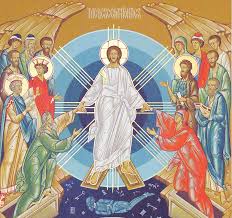
It’s Monday after Resurrection Sunday. The disciples are getting the word that Jesus is alive. In the next forty days, many will see Jesus, interact with Him, and receive the blessing of His presence. His disciples will also accept the mission that their Lord will give them …
to go and make disciples of all nations, baptizing them in the name of the Father and the Son and the Holy Spirit … and to teach these new disciples to obey all the commands Jesus had given them.
With that, He added that He would be with them … to the very end of the age.
It’s Monday after Resurrection Sunday. The first time in my entire life that I wasn’t present at a church gathering in person. I watched five different services online and one on TV, from a super modern service with a multi-camera shoot, to a single camera focused on the small stage of a church in West Virginia. I watched portions of a Catholic mass on TV, just to see what our Catholic brothers and sisters do. All in all, it made me wonder … what was the first Easter like … and the days following?
When you think about it, the resurrection of Jesus was God’s vindication and validation of who Jesus was … the Son of God. If people were questioning it then, a dead person coming to life should have been as much evidence as they needed. The same goes for us.
I know we didn’t live in that time but think about the unbelievable evidence we have that Jesus rose from the dead. I had dinner one time with Lee Strobel, author of The Case For Christ, and former investigative reporter for the Chicago Tribune. As a known atheist, he later came to Christ and was on staff at Willow Creek Community Church and has been a leading apologist of the faith ever since. I asked him how he made the jump from being an atheist to a believer. He said he was no longer able to refute the resurrection of Jesus due to the evidence that he uncovered and discovered for himself. The credibility of this historical event of Jesus is overwhelming for sure.
In talking with some non-Christians, 75% of them indicated that they disbelieved that Jesus was alive after His death. They said there was no proof … it was just a story. I explained to them that not only the gospel writers told about the resurrection of Jesus, but also the Jewish and Roman record keepers of the day dealt with Jesus being a historical figure. It didn’t seem to matter. One of the most indisputable historical facts is that Jesus died at the hands of the Romans. Sources like Josephus, who was a Jewish historian in the first century … and Tacitus, a Roman historian, and even the Jewish Talmud talks about Jesus dying. It’s a fact.
The well-known atheist scholar Gerd Lutemann says, “Jesus’ death as a consequence to crucifixion is indisputable.” Even among scholarly people—whether they are of faith or atheistic or agnostic bents—this is the most historical fact of Jesus … that He died. When people deny this, they are simply not in touch with historical data. People form their faith in a way that is comfortable for them … not necessarily in the truth that so abounds in all of the historical data and record keeping we have.
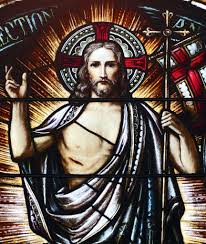
One of the most interesting texts I have found, a creed of sorts, is right out of 1 Corinthians 15:3-8 where Paul is talking to the church in Corinth. He said, “I passed on to you what was most important and what had also been passed on to me. Christ died for our sins, just as the scriptures said. He was buried, and he was raised from the dead on the third day, just as the scripture said. He was seen by Peter and then by the Twelve. After that, He was seen by more than 500 of His followers at one time, most of whom are still alive, though some have died. Then he was seen by James and later by all the apostles. Last of all, as though I had been born at the wrong time, I also saw him.” Those are a lot of eye-witnesses that saw Jesus after he died.
“Christ died, he was buried, and he was raised from the dead on the third day …”
The words, “Christ died, he was buried, and he was raised from the dead on the third day …” and even those to whom Christ appeared was a type of confessional statement, perhaps used at a believer’s baptism very early on in the life of the Church. Paul said it was given to him … that it was passed on to him. The evidence suggests that this was written shortly after the resurrection of Jesus.
First Corinthians was written by Paul around 55 AD. Paul says he received it well before then. This material likely goes back to the original disciples. The number of eyewitnesses that this text accounts for are hundreds of people seeing Jesus at one time. If that were not true, there would surely be some writing somewhere refuting this well-known statement of faith. There aren’t any.
The Church knew about these eyewitness accounts from a very early stage … perhaps just months after Jesus’ resurrection … and we are still talking about it today. To think that all of the disciples but John were martyred for their faith says a lot as well. People are not usually willing to give up their lives for something that is not true.
So why do some today deny the resurrection? Perhaps the implications for believing in the resurrection means that they would need to change their lives in a way that has to really deal with things like sin, judgement, salvation, loving my enemy and so on.
For others, anything that deals with the supernatural is a problem for them. They say that “religion is just the opiate of our times … helping people get through their problems … and that the resurrection is a made-up story to go along with it.”
But, scholars of all stripes accept a lot of fundamental facts about Jesus. His death by the Romans and his burial . . . it was a historical fact that not only Jesus died, but He was buried in a tomb that was owned by Joseph of Arimathea, a member of the Jewish Council who was responsible for handing Jesus over to Pilate. Jewish people and Jesus followers of that day would have known where this tomb was. His burial is proved in early multiple and independent sources. There is also no other competing burial story. If this was a fictitious thing, rest assured that there would have been a trace of another story … but all of the early sources are unanimous about Jesus’ burial and entombment. He was buried in a tomb that belonged to Joseph, a Jewish leader in the Sanhedrin council.
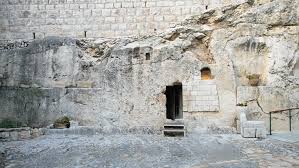
The next historical fact we need to look at is that the tomb was empty. Did the disciples steal the body? Just by raising this question is even more indication and evidence of an empty tomb. How in the world did an entire world movement come into being if there was still a corpse in the tomb? In other words, since people knew where the burial site was, and there was a corpse in it, how would Christianity even form … on a hoax? A ruse?
Luke Johnson, NT scholar of Emory University said, “Some sort of powerful, transformative experience is required to generate the sort of movement that Christianity was …” N.T. Wright, my theological hero, said, “As a historian and a theologian, I cannot explain the rise of early Christianity unless Jesus rose again leaving an empty tomb behind him.”
The fact that the empty tomb was discovered by women also plays a role in this story. Josephus said that the testimony of women was so unreliable in that day, that it shouldn’t be admitted into a Jewish court of Law—and yet, how remarkable that it was women the gospel writers talk about that were the first eyewitnesses of an empty tomb. There doesn’t seem to be a credibility problem here. If this was a legend, which in that time period took about 200 years to develop, it would have been men at the forefront of the discovery, not women. Women would not have been given the type of credibility for a legend to develop. I’m sure it was a little awkward for the gospel writers to admit that it was women who discovered first the empty tomb. But, that was the truth!
Also, many of the early eyewitnesses attest to the fact that multiple people saw Jesus both independently and at one time. The appearance of Jesus to Peter is independently recorded by Luke; the appearance to the Twelve was reported by Luke and John. The appearances in Galilee were told about by Mark, Matthew, and John … about a dozen instances in total. In ancient history, to have one or two sources saying the same thing was astonishing—we have nine sources inside the New Testament and outside the scriptures that people encountered the risen Christ. The clincher for me is the fact that 500 saw him at one time as the scriptures indicate. Talk about corroborating evidence!
Additionally, according to Jewish Law, for Jesus to have been executed as a criminal showed Him out to be a heretic under the curse of God. After the crucifixion, it appeared that the original disciples had followed a heretic and their leader was under the curse of God. Because they saw the risen Christ, they were willing to go to their death because they believed He was the Son of God.
The historical facts bear witness to the risen Christ: Jesus’ death by crucifixion by the Romans, His known burial in a tomb owned by Joseph of Arimathea, the fact that there was an empty tomb and people knew about it, multiple post-mortem appearances, and the fact that the disciples were willing to go to their death over this momentous event is quite enough for us today to know that Jesus rose from the dead.
The days following the resurrection of Jesus must have been a roller coaster of emotions for those who knew Him the best. Had He been another preacher/teacher killed for His supposed insurrection against Rome … He would have been lost to history.
The fact that He rose from the dead … and we are still talking about it today … is all the indication we really need to know that there is really something to this story.

 Real Faith Matters
Another great one, Fred! Thanks for your research and writing.
LikeLike